
OS&D
3 Ways to Control Spending on OS&D
OS&D uncertainty can drive related expenses into the millions. Computer vision can stabilize cost and effort immediately.
See Kargo in Action
Future Ready
| Kargo | 9 min


A recent survey by global consultant SCALA reveals that 69% of respondents plan to invest at least $1 million in warehouse automation between now and 2028. Nearly a quarter (23%) plan to invest approximately $25 million or more.
By extending automation to loading docks, your warehouses achieve better efficiency and accuracy at crucial entry and exit points, while contributing to a safer work environment.
For many companies, loading docks present gaps in supply chain visibility. But there are literal truckloads of data passing your dock doors in warehouse operations everyday.
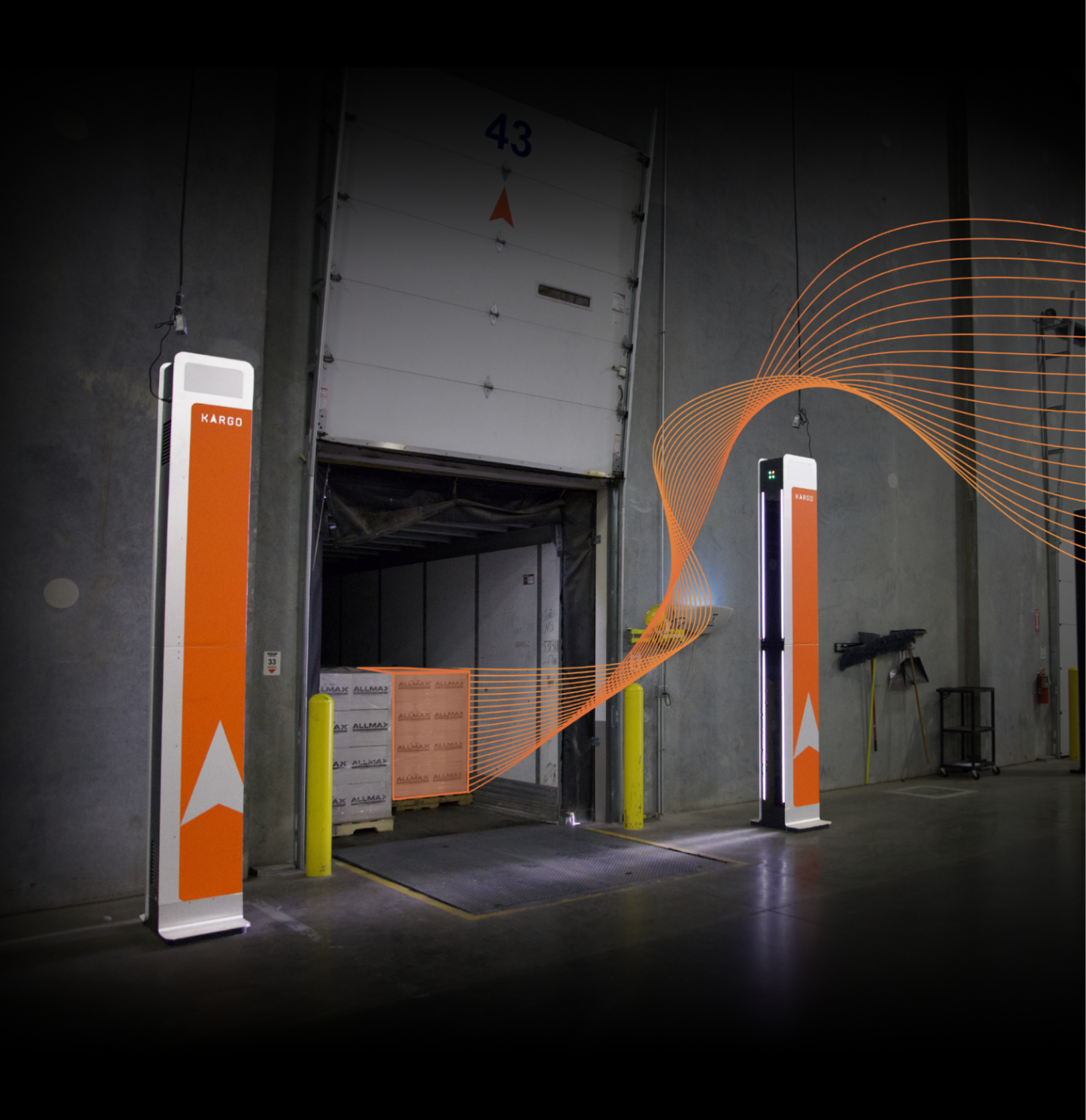
With Kargo, computer vision automatically captures shipment information and loading dock activity to create a new source of data that you can use to improve your logistics processes.
Freight label information, bar codes, or other data elements on pallets are compared against bills of lading to verify shipment accuracy, flag discrepancies, and update inventory in real time.
Plus, by expanding common definitions of data to include visuals, Kargo offers contextual understanding of your operations. Explore efficiency ratings by dock door, track safety violations via AI identification, or see exactly what happened in the warehouse to resolve a damage claim.
Companies that don't have access to this automated dock door data are already falling behind. As automation expands, the gap between which companies are innovating and which are stagnating will only get wider.
The good news is that automating your loading docks may be easier than you think - and the benefits can accrue quickly.

Here are some of the ways you can streamline operations with automated dock door solutions:
Bringing these benefits to your supply chain and logistics can happen in a matter of weeks.
In this guide, we tell you what to expect as you ramp up dock door automation.
Any questions as you review? Email us at [email protected]
When you start exploring loading dock automation, we connect on your needs and how you deliver on your customers' needs.
The main point of discovery is to determine how automated dock door systems can drive revenue based on your company's unique position in supply chain and logistics.
When you've finalized your decision to move forward, we visit you onsite to develop your onboarding strategy.
When this stage is complete, your company has a clear set of automation goals and a plan to achieve them.
Kargo Towers are installed in warehouses by a Tower technician and electrician crew. Our team takes care of the labor. You'll just need to clear the dock area ahead of time.
Once the Towers are up and running, our remote team finalizes software installation, activating your Towers for immediate and ongoing use.
When this step is complete, your loading docks are officially able to capture and translate data automatically.
Your data is available in the Kargo Platform, where you can manage shipments and analyze trends for continuous improvements.
On the first day of installation, Kargo coordinates with your warehouse manager to confirm loading dock and electrical panel access, plus any other details specific to your scenario.
In some cases, a technician comes out the day before installation begins to pre-drill anchor holes. This can help with speed and efficiency.
Each Kargo Tower gets its own dedicated electric circuit. Electricians install 120-volt panel switches, while Tower techs stand up the Towers, using a forklift and rigging, before anchoring them into place.
If your warehouse needs additional electrical work, like transformer and panel upgrades, we work with you to ensure this is done before or during installation.
As each Tower goes up, electricians hardwire them individually, turning them on for the first time and testing them for readiness.
With the Towers turned on, Kargo's software team takes over remotely.
Before Tower installation, we've already done things like create your facility pages, configure dock doors, and populate orders.
Now, we perform quality assurance checks for connectivity, making sure data uploads as expected.
Tower technicians stay onsite while software engineers work, so that if anything needs to be adjusted, you have full support available.
When installation is complete, some Kargo users like to do an informal unveiling. Grab your staff for a quick reveal and peel the film off the Towers. It can be pretty satisfying.
INTEGRATION
The next step in loading dock automation is integration of Kargo data with your existing systems.
Full integration with Kargo achieves the fastest possible data capture and delivery, real-time exception or error flagging, and network-related decision making.
Kargo can connect to any enterprise resource planning (ERP) software or warehouse, transport, or yard management system (WMS, TMS, YMS). We work with your IT team so they can connect Kargo and your existing systems via API or EDI.

There may be some customers who prefer to perform full integration at a later phase of implementation. In these cases, you would onboard Kargo as a partially integrated solution, exploring how automation can provide returns at massive scale.
When it's time to transition your operations, Kargo provides your company with several days of onsite training. This stage is when we connect with key stakeholders and staff who will work directly with Kargo.
We review how Kargo works, spotlighting features that matter in the warehouse:
If your company opts to include Kargo Forklift Cameras, we show your team how to attach camera packs to the forklifts for more complete visibility of pallets and the warehouse environment.
In the office, we train managers and other leaders on the Kargo Platform and make sure you're fully proficient working with your loading dock data.
At this stage, we begin in-depth conversations around how to make your data most impactful to your company's objectives. These conversations inform how Kargo can support you long-term.
A few weeks after initial training, we follow up with another onsite visit or a virtual check-in with operational stakeholders.
Now that your team is more familiar using Kargo, the focus shifts to optimizing automation for greater impact to your key performance indicators. You may also want to onboard additional users.
During training and optimization periods, you'll have ongoing access to support.
Kargo is here for you for the lifetime of our relationship. We include predictive maintenance of Kargo Towers and software updates when applicable.
Typically, we send a Tower technician to your sites approximately every six months. The technician checks your Kargo Towers, including camera lenses and air filters, to ensure everything is functioning as expected.
Regular operational syncs between your team and Kargo support continuous improvements, better use of data, and roadmapping for the future.
Depending on your goals, you may see returns on your automation investments quickly.
Throughout your growth cycles, Kargo can advise on new ways to leverage loading dock automation.
With industry automation increasing, shippers and 3PLs can stay ahead of the curve by automating loading docks now.
Implementation with Kargo is easy, predictable, and quick to deliver returns. Our team is here to help you do more with your logistics.
Dock door automation uses computer vision and AI technology to automatically monitor, track, and manage loading dock operations. Automated dock door systems capture data from freight movement, verify shipments, and flag discrepancies without manual intervention.
Most dock door automation installations with Kargo are completed within 48 hours. The timeline includes tower installation, electrical work, software setup, and initial training. Your automated dock door system can be operational within weeks.
Companies typically see returns on dock door automation investments quickly through reduced labor costs, fewer errors, improved accuracy, and faster processing times. Many clients expand to additional facilities after seeing initial results.
Yes, Kargo's dock door automation integrates with any ERP, WMS, TMS, or YMS through API or EDI connections. Our team works with your IT department to ensure seamless integration with your existing logistics platforms.
Kargo also has the ability to build a custom integration if needed. For integration question, email [email protected]
Kargo's automated dock door system is designed to work in any type warehouse settings. During the discovery phase, we assess your specific dock doors in warehouse operations and customize the solution to your facility's unique requirements.
OS&D uncertainty can drive related expenses into the millions. Computer vision can stabilize cost and effort immediately.
Edge computing is the key to really real-time logistics (not the hours later kind). This easy guide puts complex computing into terms that make sense to decision-makers.