
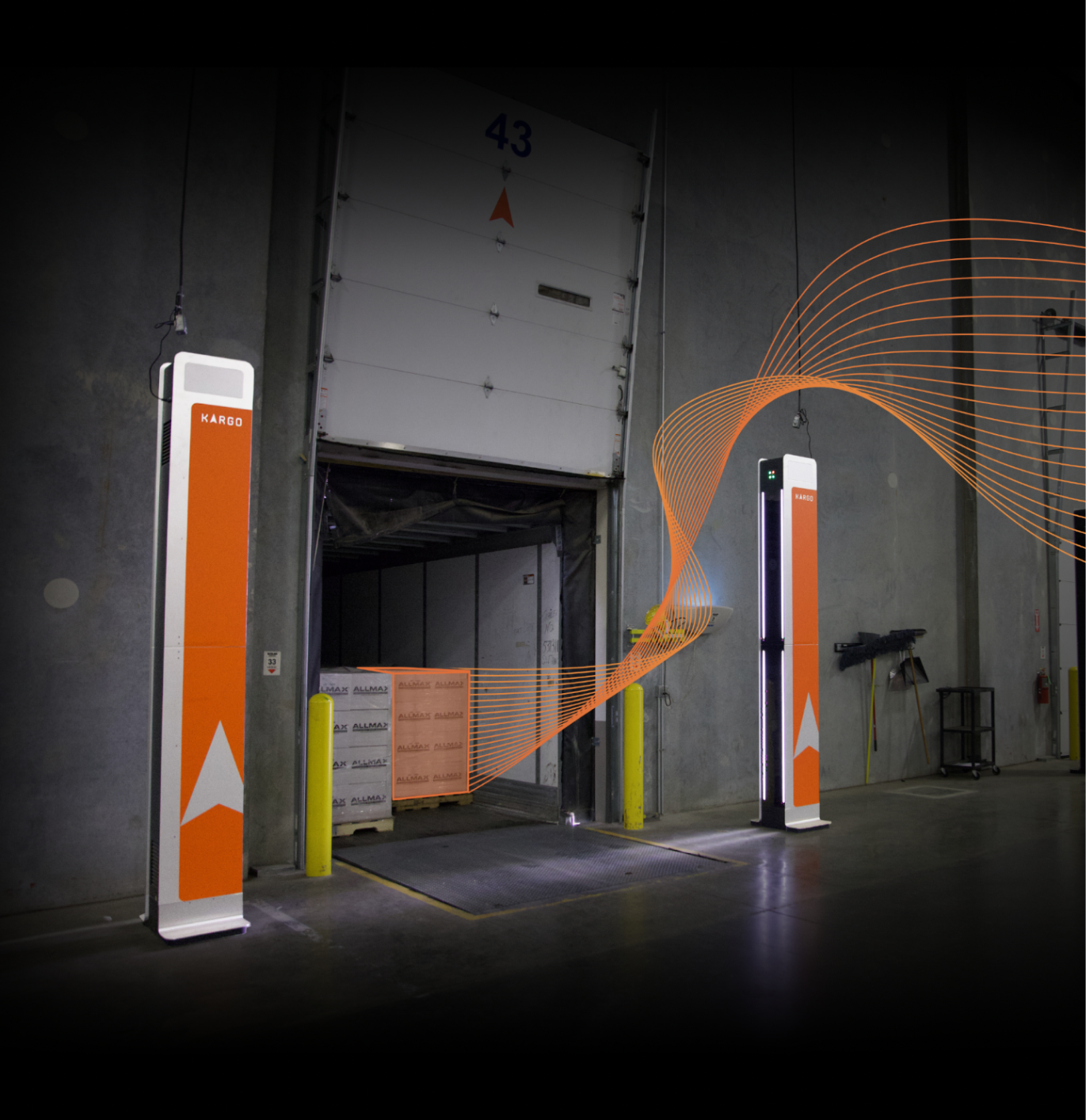
How It Works
The Complete Guide to Forklift Mounted Cameras: Why They Matter and How to Evaluate Solutions
| Kargo | 6 min
Warehouses are under constant pressure to move faster, reduce errors, and improve visibility into operations. Yet one of the biggest blind spots remains at the point of movement: when pallets are picked, transported, and loaded.
Forklift mounted cameras are emerging as a critical tool to bridge that gap—bringing visibility, automation, and accountability directly onto material handling equipment (MHE).
This guide covers what forklift mounted cameras are, why they matter, and what to consider when evaluating a solution.
What Is a Forklift Mounted Camera?
A forklift mounted camera is a collection of specialized cameras installed directly on material handling equipment (MHE), such as forklifts.
These cameras capture visual data as operators move pallets throughout the warehouse—particularly during loading and unloading. Depending on the system, they can also process that data in real time to extract inventory information, detect issues, and provide feedback to operators.
In essence, forklift cameras turn every movement of goods into a source of structured, actionable data.
Why Use a Forklift Mounted Camera?
Claims Prevention
Freight claims are a persistent and costly issue across supply chains.
Forklift cameras provide irrefutable video evidence of how goods were handled and loaded onto a trailer. This allows operators to:
- Prove product condition at time of shipment
- Show proper loading configuration
- Reject invalid damage or shortage claims with confidence
Instead of relying on manual inspection or incomplete records, teams have a visual system of record.
Mis-Ship Prevention
Mis-shipments often happen in the final moments before loading.
Forklift cameras can:
- Scan labels facing the forklift during loading
- Compare against order or shipment data in real time
- Alert operators immediately if the wrong product is being loaded
By reading LPNs, case labels, and other identifiers, these systems ensure that the right product goes to the right destination—before it leaves the dock.
Damage Detection
Damage frequently occurs during handling—not just transit.
The most common risk point is the front of the pallet, where forks can accidentally puncture or crush product.
Forklift cameras provide visibility into:
- Fork-to-product interaction
- Pallet condition before loading
- Operator-induced damage events
This enables teams to catch issues before shipment and hold the right party accountable.
Automated Scanning
Traditional workflows rely heavily on manual scanning:
Pick → Stage → Load → Scan at each step
Forklift cameras eliminate this friction by automatically capturing data during movement. This allows you to:
- Remove manual scanning steps
- Push data directly into the WMS
- Create a seamless, continuous loading process
The result is faster throughput with fewer opportunities for human error.
Supplier Accountability
Issues often originate upstream—but aren’t discovered until it’s too late.
With forklift cameras, teams can:
- Capture product condition the moment it enters the facility
- Identify supplier errors at receiving or loading
- File claims backed by timestamped visual evidence
This creates a clear, objective record of responsibility across the supply chain.
Safety
Beyond inventory, forklift cameras can improve operational safety.
Depending on the system, they can:
- Detect unsafe behaviors (speeding, lack of PPE, distracted driving)
- Provide visibility into surrounding environments
- Help prevent collisions in real time
By combining visibility with AI, these systems can act as an additional layer of safety enforcement.
Things to Consider When Evaluating a Forklift Mounted Camera
Not all forklift camera systems are created equal. The effectiveness of a solution depends heavily on how it is designed and deployed.
Here are the key factors to evaluate:
Field of View (FOV)
The field of view (FOV) determines what the camera can actually capture.
- Cameras mounted on top of the MHE can provide a 360° view, ideal for safety and situational awareness
- Forward-facing cameras mimic the operator’s perspective, which is better for scanning labels and detecting damage
FOV also impacts:
- How high (e.g., double-stacked pallets) the camera can see
- How wide an area it can capture
- Whether labels are consistently in frame
If your operation includes double stacking or variable label placement, FOV becomes critical.
Mounting Location
Where the camera is mounted directly affects durability and performance.
Exterior mounting (front of mast):
- Better visibility of labels and pallets
- Higher risk of physical damage
- Increased maintenance costs
Protected mounting (top of cab or behind mast):
- Safer from impacts
- Potential occlusion of key data
The right balance depends on your use case—but durability should not be overlooked.
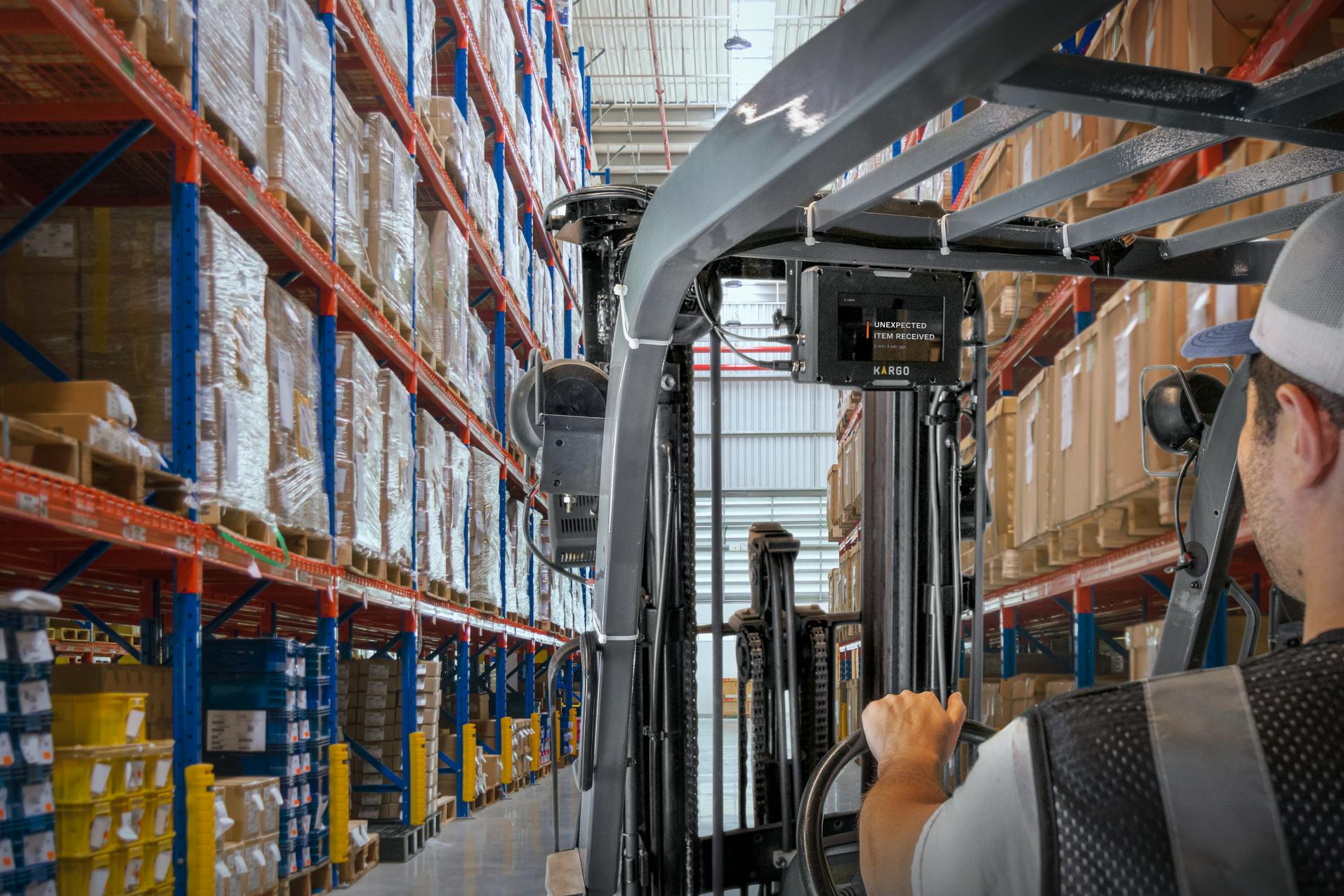
Operator Interface (Screens)
Some systems include screens that provide real-time feedback to operators.
This can be useful for:
- Alerting operators to mis-shipments
- Highlighting detected issues
- Guiding corrective actions
However, it’s important to ensure that screens enhance—not distract from—operator workflows.
Power and Battery Management
Battery management is often an overlooked operational burden.
Questions to consider:
- Does the system require separate batteries?
- How often do they need to be replaced or charged?
- Does this introduce additional steps for operators or maintenance teams?
Even long-lasting batteries eventually need replacement—and that process adds friction.
Vibration Handling
Forklifts operate in harsh environments with constant vibration—especially when moving in and out of trailers.
If a camera system isn’t built specifically for MHE:
- Image quality can degrade
- Hardware can fail prematurely
- Data accuracy can suffer
Look for systems designed with vibration dampening and industrial-grade durability.
Operator Intervention
The best systems require zero manual intervention.
If operators need to:
- Trigger scans
- Adjust positioning
- Re-scan missed data
…then human error is reintroduced into the process.
True automation happens when data is captured passively, without changing operator behavior.
Label and Inventory Data Capture
This is one of the most important—and most overlooked—areas.
Ask:
What is the smallest data the camera can read?
- Can it capture small fonts or dense labels?
- Does performance degrade at speed?
Does it require specific label formats or placement?
- Requiring standardized labels can be unrealistic
- Supplier coordination is often difficult
- Operators may not place labels consistently
A robust system should work with real-world variability, not ideal conditions.
Can it read data off corrugate?
Not all data is on a clean label.
Many operations rely on:
- Low-contrast black text
- Printed directly on brown corrugate
The system must be able to extract this data reliably.
Can it read through plastic wrap?
Plastic wrap is unavoidable in warehouse operations.
A capable system should:
- Read through multiple layers of wrap
- Handle glare and distortion
- Maintain accuracy in real-world conditions
Impact on Operator Speed
Finally, consider whether the system affects throughput.
If operators need to:
- Slow down
- Pause for scans
- Adjust workflows
…the cost adds up quickly.
Even small delays compound across hundreds or thousands of pallet movements per day.
The best systems operate at full speed, without requiring behavioral changes.
Final Thoughts
Forklift mounted cameras represent a fundamental shift in how warehouses capture and use operational data.
Instead of relying on manual processes and incomplete records, teams can:
- Capture data continuously
- Prevent errors in real time
- Create a visual system of record for every pallet movement
But success depends on choosing the right system—one that works with your operation, not against it.
If you’re evaluating forklift camera solutions, focus on real-world performance: durability, accuracy, and the ability to operate seamlessly without slowing your team down.
That’s where the true value is unlocked.
Ready to See Mounted Forklift Cameras in Action?
The Kargo Lift turns every pallet movement into visibility and accountability—no scanners, no delays. See how it works with a live virtual tour at kargo.ai.

Questions?
Connect With us
Ask us anything or drop your email to stay in touch